
You can add any HTML here
We suggest you to create a Saved Template in Dashboard -> Templates -> Saved Templates and use it by switching content type above to Saved template.
Semaglutide
Semaglutide is a metabolic research compound commonly evaluated in studies focused on GLP-1 receptor pathway and metabolic signaling research. Also referenced as Semaglutide, it is frequently used in laboratory models examining incretin pathway models and cellular response mechanisms.
In Simple Terms
- Used in research focused on metabolic signaling and energy regulation pathways
- Often included in studies exploring receptor activity linked to metabolism
- Supports comparison across controlled body-composition and pathway-response models
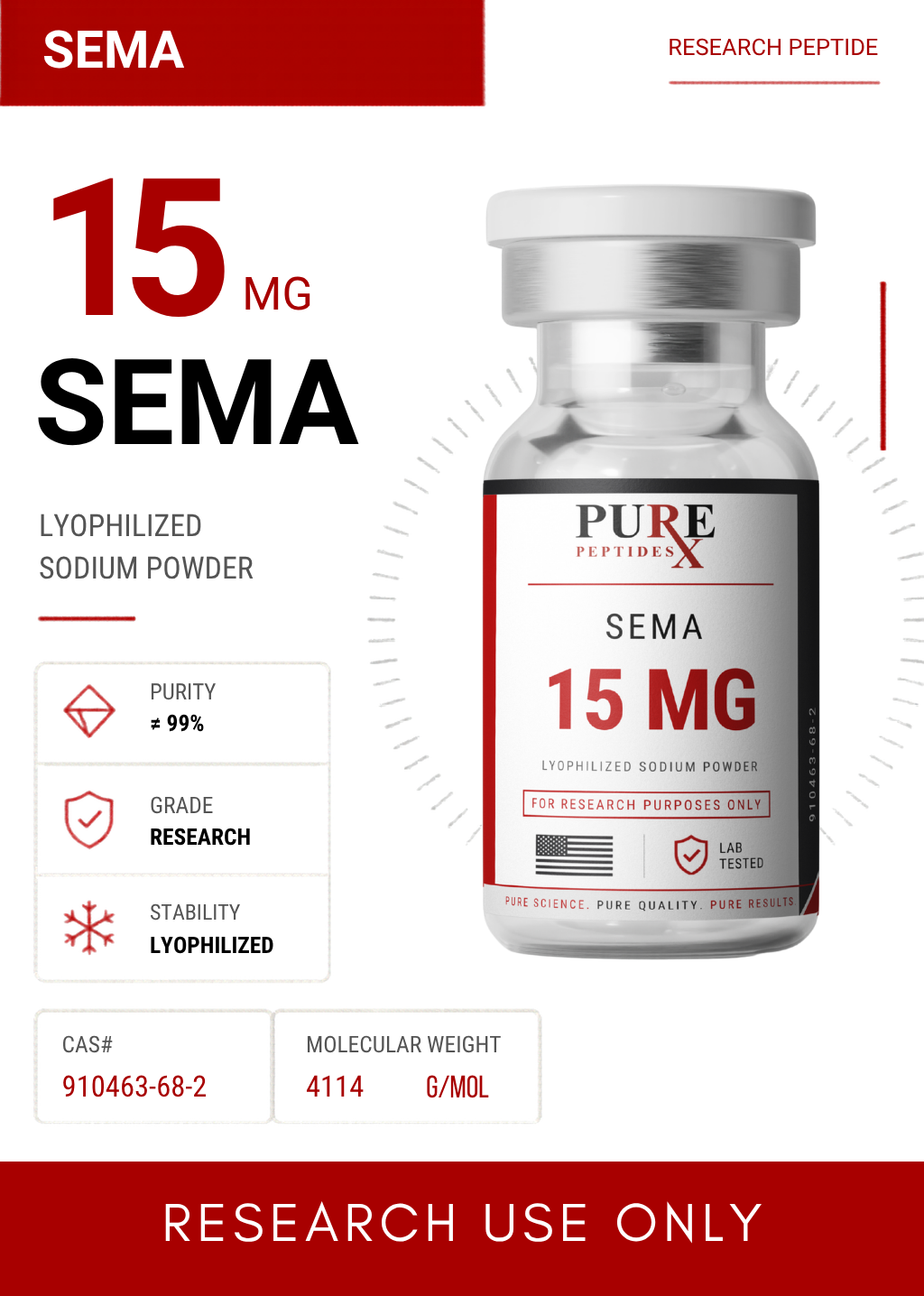
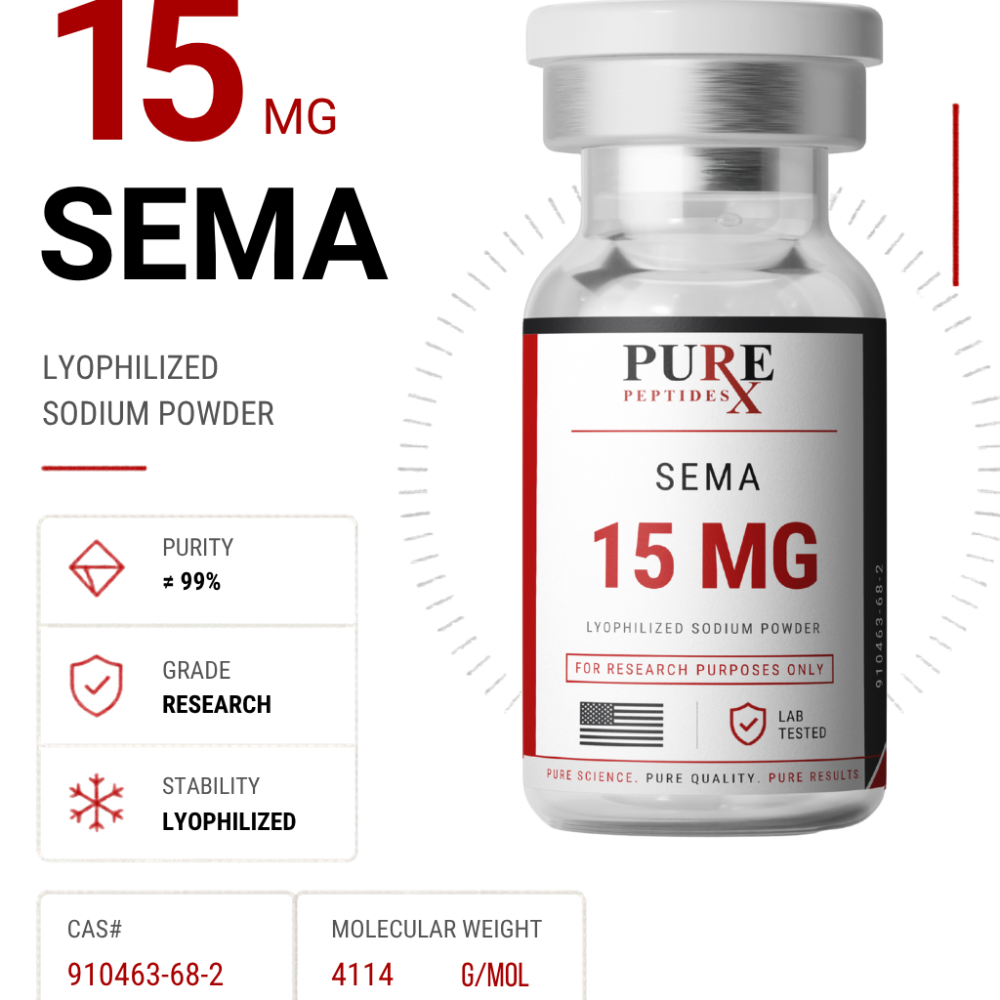
Quick Summary: Semaglutide is supplied as a 15mg lyophilized research compound.
Semaglutide Quick Specs
- Listed Size: 15mg
- Form: Lyophilized powder
- Purity: >99%
- Research Category: Metabolic Research Compound
- Use Classification: Research purposes only
What is Semaglutide?
Semaglutide is used in controlled laboratory settings to help researchers evaluate targeted biological pathways. Research involving this compound typically focuses on GLP-1 receptor pathway and metabolic signaling research, with attention to receptor activity, cellular signaling, and measurable pathway response in experimental models.
Semaglutide Research Highlights
- Commonly evaluated in metabolic pathway research
- Studied for receptor interaction related to energy balance and nutrient signaling
- Used in controlled in vitro and laboratory research models
- Helpful for comparing incretin, lipolysis, and metabolic signaling models
Semaglutide Research Background
Semaglutide appears in research discussions related to GLP-1 receptor pathway and metabolic signaling research. Its structure allows researchers to focus on specific pathway behavior, receptor interaction, and cellular responses under controlled experimental conditions.
Mechanism of Interest
- Pathway activity: evaluated for interaction with incretin pathway models
- Cellular signaling: studied for effects on controlled cellular response models
- Structure-function relationship: analyzed to understand how molecular structure influences observed outcomes
Related Research Compounds
Researchers comparing Semaglutide often review related compounds within the same research category:
- Cagrilintide – metabolic research compound
- KLOW – metabolic research blend
- Lipo-C – metabolic support research compound
- Mazdutide – metabolic research compound
Also Known As
- Semaglutide
- Sema
- Sema 15mg
Semaglutide Handling and Storage
Store Semaglutide in a cool, dry environment and protect from light and moisture. Refrigeration is commonly used for long-term storage of lyophilized compounds. Avoid repeated exposure to heat or humidity during handling.
Semaglutide FAQ
What is Semaglutide used for in research?
Semaglutide is evaluated in laboratory research to study GLP-1 receptor pathway and metabolic signaling research.
Is Semaglutide intended for human or animal use?
No. Semaglutide is for research purposes only and is not intended for human or animal use, diagnosis, treatment, or consumption.
How should Semaglutide be stored?
Semaglutide should be kept in a cool, dry place and protected from light and moisture. Refrigeration is recommended for long-term storage.
What compounds are commonly compared with Semaglutide?
Researchers often compare Semaglutide with related compounds in the metabolic research compound category to evaluate similarities in pathway activity, structure, and experimental response.
Disclaimer
For research purposes only. This product is not intended for human or animal use, diagnosis, treatment, or consumption.
Sema 15mg
$65.00
Semaglutide is a GLP-1 receptor research compound studied in metabolic signaling, appetite-regulation models, and glucose-related pathway behavior.
Its strong research presence comes from studies exploring satiety response, energy intake pathways, and incretin-based metabolic activity. Recognized, focused, and built for modern metabolic research.
GLP-1 pathway research with a proven scientific footprint.
Semaglutide
Semaglutide is a metabolic research compound commonly evaluated in studies focused on GLP-1 receptor pathway and metabolic signaling research. Also referenced as Semaglutide, it is frequently used in laboratory models examining incretin pathway models and cellular response mechanisms.
In Simple Terms
- Used in research focused on metabolic signaling and energy regulation pathways
- Often included in studies exploring receptor activity linked to metabolism
- Supports comparison across controlled body-composition and pathway-response models
Quick Summary: Semaglutide is supplied as a 15mg lyophilized research compound.
Semaglutide Quick Specs
- Listed Size: 15mg
- Form: Lyophilized powder
- Purity: >99%
- Research Category: Metabolic Research Compound
- Use Classification: Research purposes only
What is Semaglutide?
Semaglutide is used in controlled laboratory settings to help researchers evaluate targeted biological pathways. Research involving this compound typically focuses on GLP-1 receptor pathway and metabolic signaling research, with attention to receptor activity, cellular signaling, and measurable pathway response in experimental models.
Semaglutide Research Highlights
- Commonly evaluated in metabolic pathway research
- Studied for receptor interaction related to energy balance and nutrient signaling
- Used in controlled in vitro and laboratory research models
- Helpful for comparing incretin, lipolysis, and metabolic signaling models
Semaglutide Research Background
Semaglutide appears in research discussions related to GLP-1 receptor pathway and metabolic signaling research. Its structure allows researchers to focus on specific pathway behavior, receptor interaction, and cellular responses under controlled experimental conditions.
Mechanism of Interest
- Pathway activity: evaluated for interaction with incretin pathway models
- Cellular signaling: studied for effects on controlled cellular response models
- Structure-function relationship: analyzed to understand how molecular structure influences observed outcomes
Related Research Compounds
Researchers comparing Semaglutide often review related compounds within the same research category:
- Cagrilintide – metabolic research compound
- KLOW – metabolic research blend
- Lipo-C – metabolic support research compound
- Mazdutide – metabolic research compound
Also Known As
- Semaglutide
- Sema
- Sema 15mg
Semaglutide Handling and Storage
Store Semaglutide in a cool, dry environment and protect from light and moisture. Refrigeration is commonly used for long-term storage of lyophilized compounds. Avoid repeated exposure to heat or humidity during handling.
Semaglutide FAQ
What is Semaglutide used for in research?
Semaglutide is evaluated in laboratory research to study GLP-1 receptor pathway and metabolic signaling research.
Is Semaglutide intended for human or animal use?
No. Semaglutide is for research purposes only and is not intended for human or animal use, diagnosis, treatment, or consumption.
How should Semaglutide be stored?
Semaglutide should be kept in a cool, dry place and protected from light and moisture. Refrigeration is recommended for long-term storage.
What compounds are commonly compared with Semaglutide?
Researchers often compare Semaglutide with related compounds in the metabolic research compound category to evaluate similarities in pathway activity, structure, and experimental response.
Disclaimer
For research purposes only. This product is not intended for human or animal use, diagnosis, treatment, or consumption.
In stock
- Free shipping on all orders above $175
- Super Fast Shipping!
- Packaging doubles as storage container.
Related products



 Sema 15mg
$65.00
In stock